Canadian university student's 'shocking'
article secures prestigious Newspaper Guild award
TNG Canada/CWA
For the first time since its inception,
The Newspaper Guild's David S. Barr Award for social
justice journalism has been won by a student attending
a school in Canada.
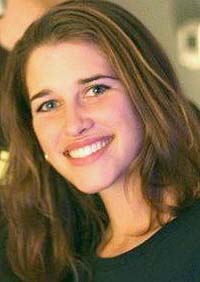
Kendyl R. Salcito, 24, who
is just now finishing her master's degree in journalism
at the University of British Columbia in Vancouver,
impressed the judges with what they described as
her "shocking" article
headlined "War
brewing over mineral rights in rural B.C."
The article about a controversial
government program that allows mineral staking on
private property — published
June 14, 2006, in the online newsmagazine The
Tyee — was
considered by the judges to be "an important public
policy story" that was "thoroughly reported" and "well
written."
"Kendyl has a great future in
journalism and we were lucky to have her at The
Tyee last summer, helping us break this series of news stories
(that were) quickly picked up by Canada's national
media, and even the internet buzz machine beyond Canada's
borders," says Editor David Beers, who is currently
serving as Salcito's thesis adviser.
The award, which will be handed out on May 3 at the
Freedom Award banquet in Washington D.C. (winners receive
transportation to Washington and hotel lodging), is
accompanied by a cash prize of $1,500 U.S.
Salcito could hardly believe
it when told she had won the Barr award. "Did I really win? That's
fantastic, thank you very, VERY much!! You have made
my week. ... But really — did I win?"
The news arrived just as she
was knuckling down to finish her thesis, due at the
end of this week. It's an investigative piece that
debunks claims — by
no less an august journal than The
New York Times — that
Denver-based mining giant Newmont was poisoning villagers
in the vicinity of one of its operations in Indonesia.
Salcito says the criminal charges brought against company
principals in the Southeast Asian archipelago are "totally
bogus" and she's hoping her thesis, if published,
will shed new light on the situation.
Tackling such daunting stories
is all in a school day's work for Salcito, who "specializes in international
reporting in the era of global capitalism," according
to her profile on the JournalismEthics.ca website,
for which she has been writing and editing since the
fall of 2005. The website is a project of the School
of Journalism at UBC, where she entered the two-year
program in September of that year.
Salcito, an American citizen
who studied abroad in France during her college years
and returned to the United States to earn a BA in
History from Princeton University, was working for
a non-profit organization in Thailand that runs a
program for street kids when she became interested
in politics. Outraged at the media coverage by Fox
television and the BBC of the American presidential
election, she decided to pursue a career in journalism
in Canada, which was close to home "but not
the U.S."
Salcito, who last year provided
stories to Vancouver radio station CKNW and the CBC,
reserves her utmost gratitude for the online newsmagazine
that has a huge following on the West Coast. "I
owe everything to The Tyee," she says.
Editor Beers "assigned me to stories
that were too big for my britches."
For his part, Beers says "Kendyl
is smart, fearless and abounding with energy and
curiosity."
Referring to her award-winning
article, he says that "to
break this story of a sagebrush rebellion brewing over
mining rights, she travelled to British Columbia's
interior and spent time with ranchers angry that outside
mining firms, and even freelance prospectors, had the
legal right to enter their land and begin marking claims
and digging up soil.
"Recent changes in the law had made it even easier
than before — a person could sit at his computer
and 'claim' the subsurface mineral rights to your land
via the internet for pennies an acre — and so
this was the human and political story behind an important
but largely unnoticed policy change. "
Furthermore, notes Beers, "Kendyl
also researched the context, including the fact that
mining firms were the largest contributors to the
political party in power, and the fact that other
provinces in Canada were not as friendly towards
firms making mining claims on private property. "
Salcito, who will soon be moving to New York City
for a 13-week internship at Newsweek magazine, says
her $1,500 prize will probably go toward paying down
her student loans. She'll get a chance to lobby for
a permanent position at the venerable publication if
she can buttonhole the keynote speaker at the May 3
awards banquet: Jonathan Alter, Newsweek's senior editor
and columnist.
There were 55 entries (high school and post-secondary
categories combined) competing this year for the award,
which was instituted in 1999 in memory of David
S. Barr, who died suddenly in 1997. For a quarter of a
century, Barr served as The Newspaper Guild's general
counsel, mentor, role model and institutional memory.
The panel of judges includes: Debbie Barr, wife of
David Barr and a high school teacher; Barbara Camens,
partner of David Barr and TNG's legal counsel; Howard
Stanger, Associate Professor at Canisius College in
New York; and Erin Chan, member of the Detroit Newspaper
Guild and a working journalist.